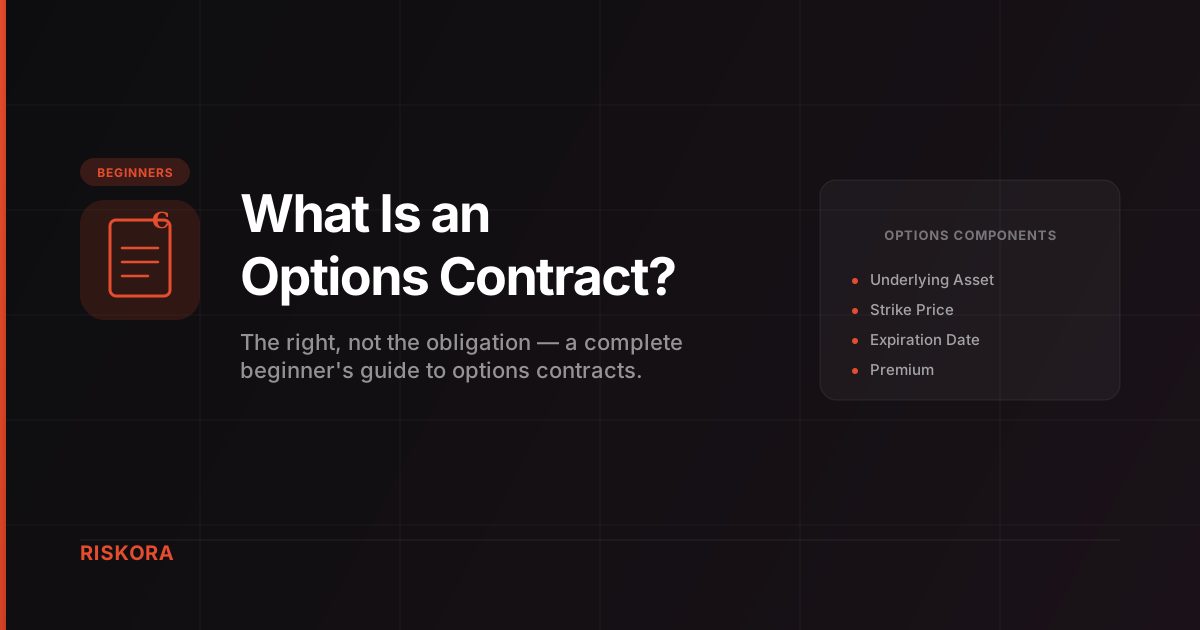
What Is an Options Contract? A Beginner's Complete Guide
Options give you the right — not the obligation — to buy or sell stock. Here's everything you need to know before placing your first trade.
An options contract is an agreement between two parties that gives the buyer the right, but not the obligation, to buy or sell an underlying asset at a specified price before a specific date.
That single sentence contains everything. Let's unpack it.
The Key Components of Any Option
Every options contract has four defining characteristics:
1. Underlying asset — The stock (or ETF, index, etc.) the option is based on. If you buy an Apple option, Apple stock is the underlying.
2. Strike price — The price at which you have the right to buy or sell. If your call has a $150 strike on a stock trading at $145, you have the right to buy at $150 regardless of where the stock goes.
3. Expiration date — The date the contract expires. After this date, an unexercised option becomes worthless. Expirations range from days to years.
4. Premium — What you pay to own the contract. This is your maximum risk as a buyer. Think of it like an insurance premium.
Calls vs. Puts
There are only two types of options:
- Call option — The right to buy shares at the strike price. You profit when the stock goes up.
- Put option — The right to sell shares at the strike price. You profit when the stock goes down.
Why Would Anyone Buy Options?
Leverage
One contract controls 100 shares. A $300 call option on a $200 stock gives you exposure to $20,000 worth of stock — for just $300.
Defined risk
As a buyer, your maximum loss is the premium paid. You can never lose more than what you invested.
Hedging
Puts can protect an existing stock position from a market drop — like an insurance policy on your portfolio.
A Simple Example
Suppose a stock is trading at $100. You believe it will rise to $120 in the next month. Instead of buying 100 shares for $10,000, you buy 1 call option with a $105 strike for $200.
- If the stock reaches $120, your option is worth at least $1,500 — a 650% return.
- If the stock stays at $100 or drops, your option expires worthless and you lose $200.
The same stock movement. Radically different capital at risk.
What You Actually Need to Know
Options are not lottery tickets. The best traders use them to express a specific view with precisely defined risk. Before placing any trade, you should know:
- Your break-even price — where the trade starts making money
- Your max loss — the worst case scenario
- Your max profit — the best case scenario
- The probability — how likely the trade is to work
OptionBrain shows you all four for any strategy before you commit a single dollar. Start with the Strategy Explorer to visualize your first options position.
More Posts
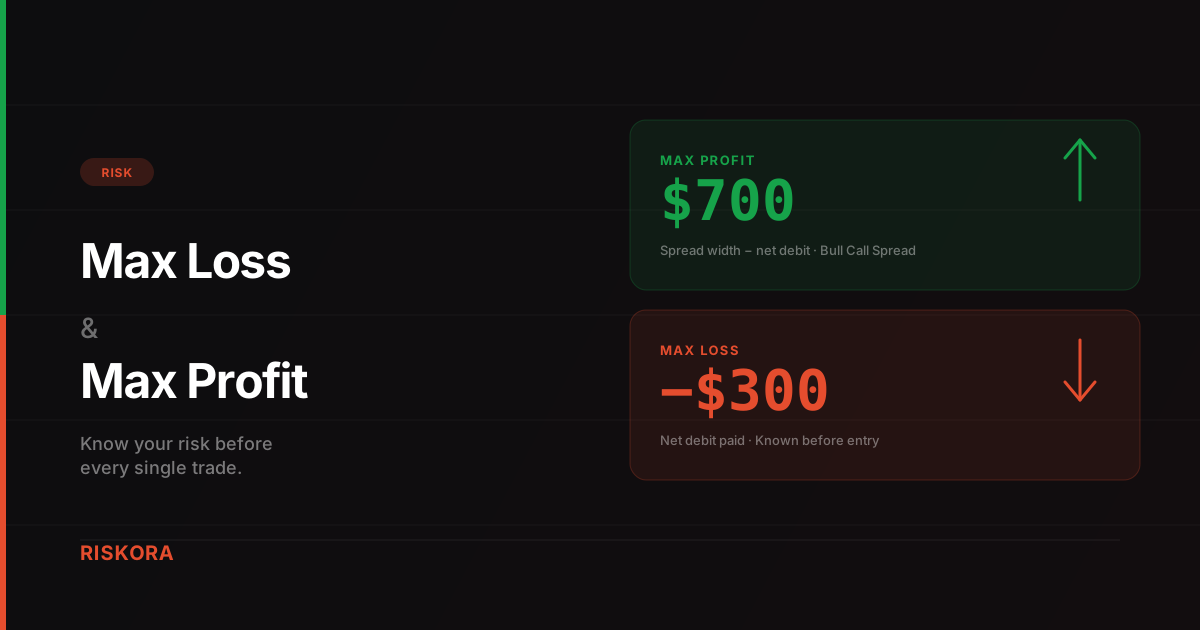
Max Loss and Max Profit: Know Your Risk Before Every Trade
Every defined-risk options strategy has hard limits on what you can gain or lose. Understanding these numbers is the foundation of responsible trading.

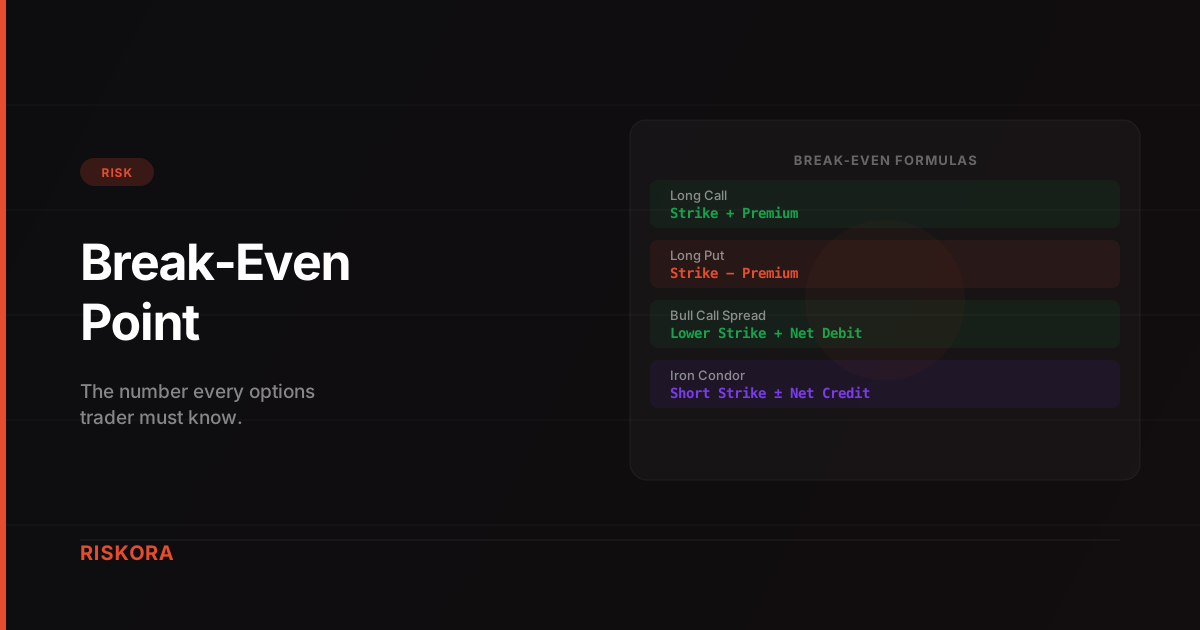
Break-Even Point: The Number Every Options Trader Must Know
Your break-even tells you exactly where the stock must be for your trade to start making money. Here's how to calculate it for any strategy.
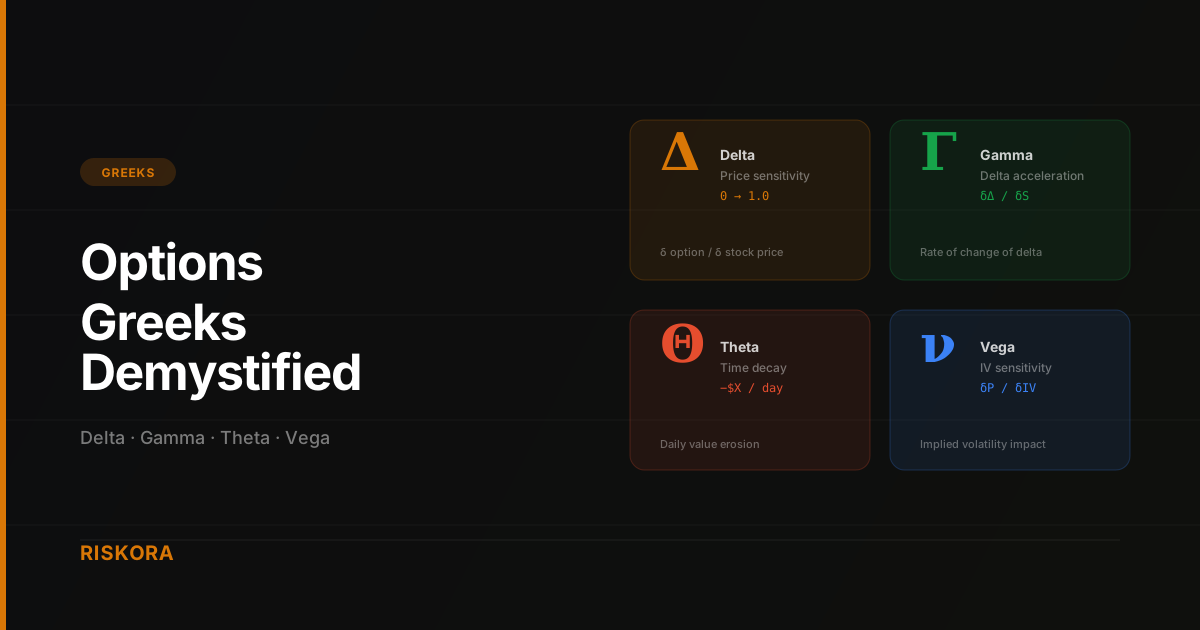
Options Greeks Demystified: Delta, Gamma, Theta & Vega
The Greeks measure how sensitive your option's price is to market changes. Understanding them is the difference between reacting and knowing.
Newsletter
Join the community
Subscribe to our newsletter for the latest news and updates