Max Loss and Max Profit: Know Your Risk Before Every Trade
Every defined-risk options strategy has hard limits on what you can gain or lose. Understanding these numbers is the foundation of responsible trading.
Options traders like to talk about the big wins. But the best traders focus on something else entirely: the worst case before it happens.
Knowing your max loss before you enter a trade is not pessimism. It is professionalism.
Defined Risk vs. Undefined Risk
One of the most important concepts in options trading is the distinction between defined-risk and undefined-risk positions.
Defined-risk: You know the absolute maximum you can lose before entering the trade. It cannot change.
Undefined risk: Theoretically unlimited. You can lose more than you expected.
For most beginners, defined-risk strategies are non-negotiable.
Max Loss by Strategy
Long Call or Long Put
- Max loss: Premium paid
- Example: Buy a call for $3.00 → max loss = $300 per contract
This is the safest structure. No matter what the stock does, you cannot lose more than your premium.
Bull Call Spread / Bear Put Spread
- Max loss: Net debit paid
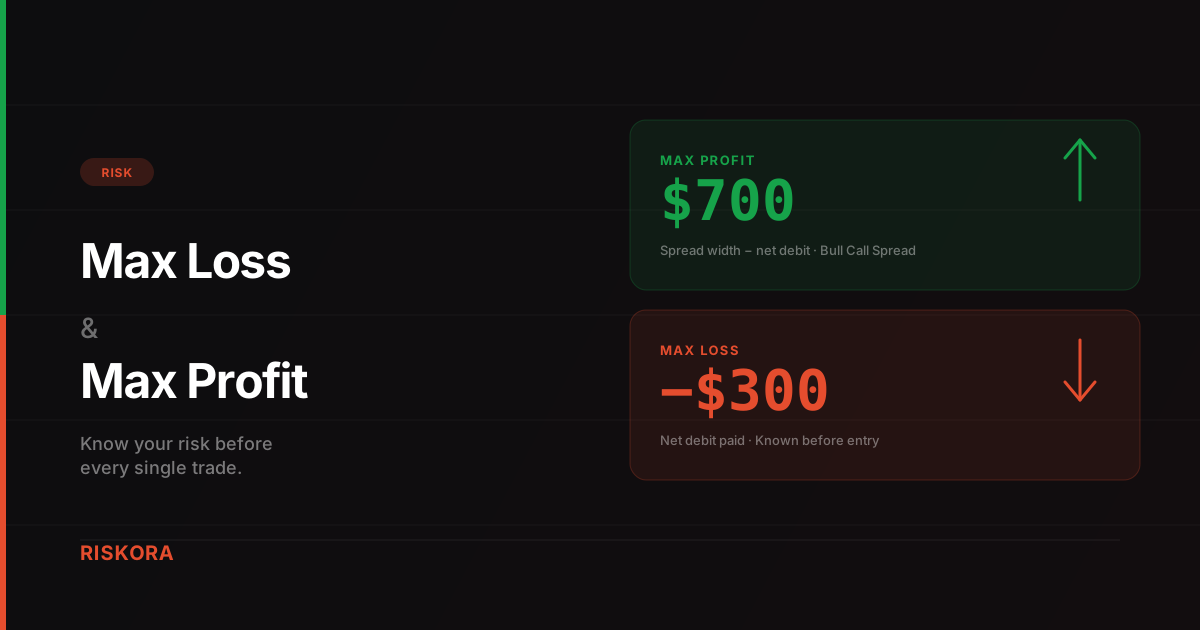
- Example: Buy $150/$160 bull call spread for $3.00 → max loss = $300
Slightly more complex, same defined-risk principle. Your loss is capped at what you paid.
Iron Condor
- Max loss: Width of one spread minus net credit received
- Example: $5 wide spreads, $1.50 credit → max loss = ($5 − $1.50) × 100 = $350
Both spreads provide a ceiling on your loss. You know before entry how bad it can get.
Short Put (Undefined Risk)
- Max loss: Strike price × 100, minus premium received (if stock goes to zero)
- Example: Sell a $150 put for $3.00 → max loss = $14,700
Not "unlimited" like a short call, but potentially catastrophic for a stock in freefall.
Short Call (Undefined Risk)
- Max loss: Theoretically unlimited
- This is one of the riskiest positions in options trading and not recommended for most traders.
Max Profit by Strategy
| Strategy | Max profit formula |
|---|---|
| Long call | Unlimited |
| Long put | Strike × 100 − premium paid |
| Bull call spread | Spread width − net debit |
| Bear put spread | Spread width − net debit |
| Iron condor | Net credit received |
| Short put | Premium received |
| Short call | Premium received |
The Risk/Reward Calculation
For any defined-risk trade, calculate the risk/reward ratio:
Risk/Reward = Max Loss ÷ Max Profit
A bull call spread with $300 max loss and $700 max profit has a 0.43 risk/reward ratio — you're risking $0.43 to make $1.00.
A good rule of thumb: target trades where max profit is at least 1.5x max loss, unless you have a very high probability setup.
Why This Matters Before You Trade
Knowing max loss and max profit in advance allows you to:
- Size your position correctly — Never risk more than 2–5% of your account on a single trade
- Set your expectations — Understand whether the reward justifies the risk
- Manage your emotions — When you know the worst case is tolerable, you make better decisions
- Plan your exit — Know when you'll close early (50% of max profit) vs. hold to expiration
The traders who blow up their accounts aren't the ones who lose trades. They're the ones who didn't know what their max loss was.
OptionBrain displays max loss, max profit, and break-even for every strategy on the Strategy Explorer — calculated automatically from your inputs, before you trade.
More Posts
Break-Even Point: The Number Every Options Trader Must Know
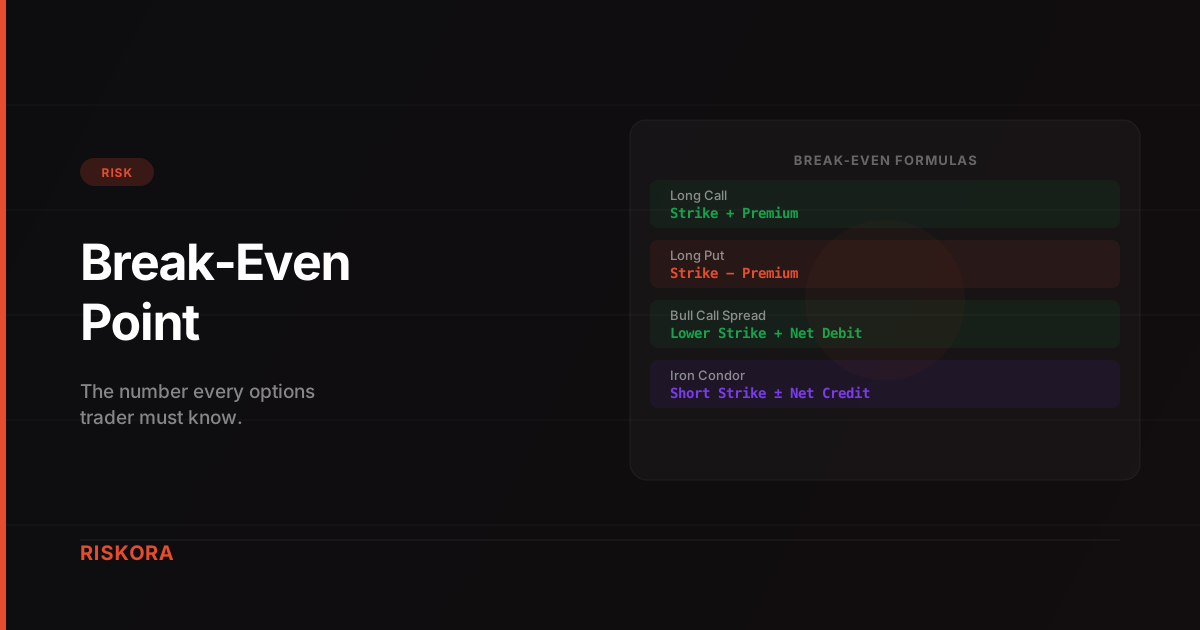
Your break-even tells you exactly where the stock must be for your trade to start making money. Here's how to calculate it for any strategy.

Bull Call Spread: A Defined-Risk Way to Play Bullish Moves
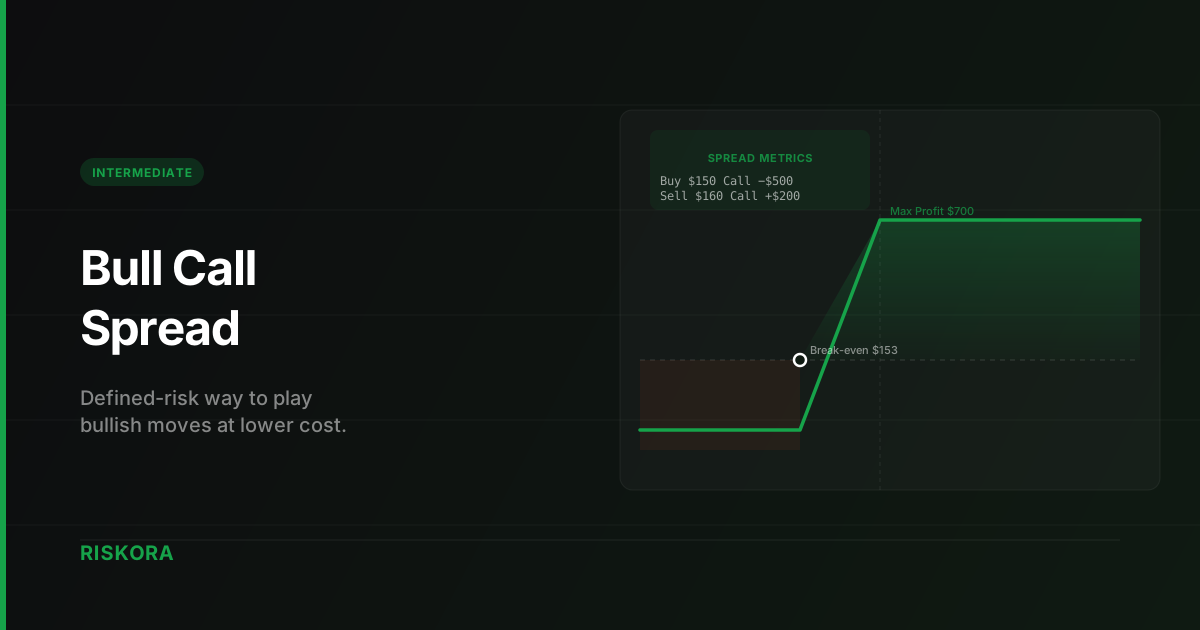
A bull call spread caps both your profit and your loss — making it ideal when you're moderately bullish but want to reduce the cost of entry.
Options Greeks Demystified: Delta, Gamma, Theta & Vega
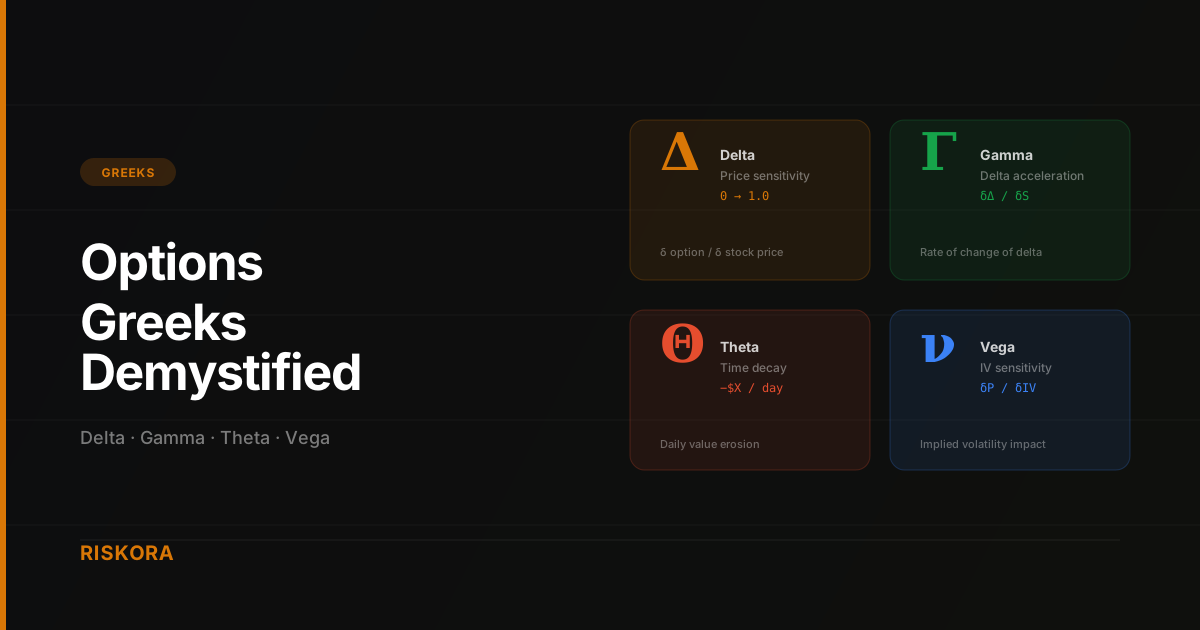
The Greeks measure how sensitive your option's price is to market changes. Understanding them is the difference between reacting and knowing.
Newsletter
Join the community
Subscribe to our newsletter for the latest news and updates