Iron Condor Explained: Profit When the Market Goes Nowhere
The iron condor is a neutral options strategy that profits from low volatility and time decay. Here's how it works, when to use it, and how to manage it.
Most options strategies require the stock to move — up for calls, down for puts. The iron condor is different. It profits when the stock doesn't move.
It's one of the most popular strategies among experienced traders precisely because it turns the enemy of most option buyers — time decay — into an ally.
What Is an Iron Condor?
An iron condor is a four-leg options strategy consisting of:
- Sell an OTM call (short call)
- Buy a further OTM call (long call — your hedge)
- Sell an OTM put (short put)
- Buy a further OTM put (long put — your hedge)
You're selling a call spread and a put spread simultaneously, collecting premium from both.
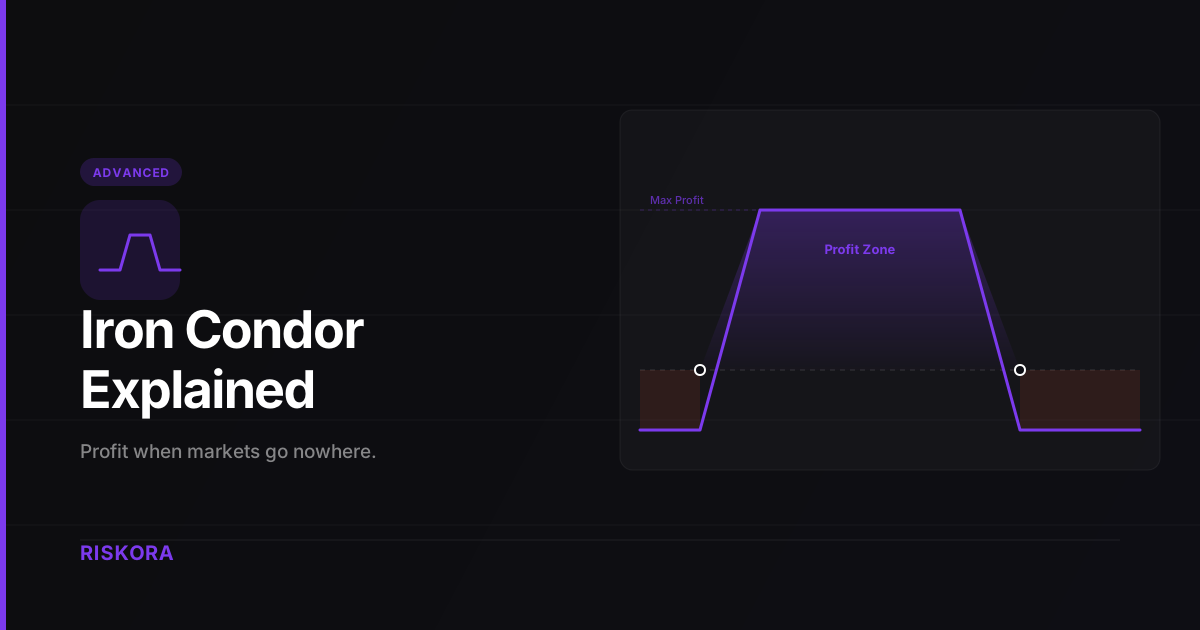
The Payoff Diagram
The iron condor produces a distinctive tent-shaped payoff:
- Maximum profit: The net premium collected — earned when the stock expires between the two short strikes.
- Maximum loss: Width of one spread minus the net premium — occurs if the stock moves aggressively in either direction.
- Break-even points: Two of them — one on each side, calculated from the short strikes ± net premium.
A Concrete Example
Suppose a stock is trading at $200.
| Leg | Strike | Action | Premium |
|---|---|---|---|
| Short call | $215 | Sell | +$1.50 |
| Long call | $220 | Buy | −$0.75 |
| Short put | $185 | Sell | +$1.50 |
| Long put | $180 | Buy | −$0.75 |
Net credit collected: $1.50 per share = $150 per contract
- Max profit: $150 (stock expires between $185 and $215)
- Max loss: ($220 − $215 − $1.50) × 100 = $350
- Upper break-even: $215 + $1.50 = $216.50
- Lower break-even: $185 − $1.50 = $183.50
As long as the stock stays in the $183.50–$216.50 range, the trade is profitable.
When to Use an Iron Condor
The iron condor thrives in specific conditions:
- Low volatility environments — When IV is elevated relative to what you expect the stock to actually do
- Before earnings (carefully) — Some traders use condors when they expect a muted reaction to earnings
- On indexes — Indexes tend to move less violently than individual stocks, making condors more reliable
Risks to Know
- Directional risk: A strong trend in either direction will breach one side of your condor.
- Gamma risk near expiration: As expiration approaches, a condor near the short strikes can lose value rapidly.
- Assignment risk: Selling puts carries assignment risk if the stock falls through the short put.
Managing the Trade
Unlike a long option you can just hold and forget, iron condors need active management:
- Take profit early — Many traders close at 50% of max profit rather than holding to expiration.
- Roll one side — If the stock moves toward one side, you can roll that short strike further out.
- Set a max loss rule — Define upfront at what loss you'll exit.
The iron condor is not a "set and forget" strategy. But with proper management, it's one of the most consistent income-generating strategies available.
Visualize an iron condor with your own strike prices on OptionBrain's Strategy Explorer — including live break-evens and the tent-shaped payoff diagram.
More Posts
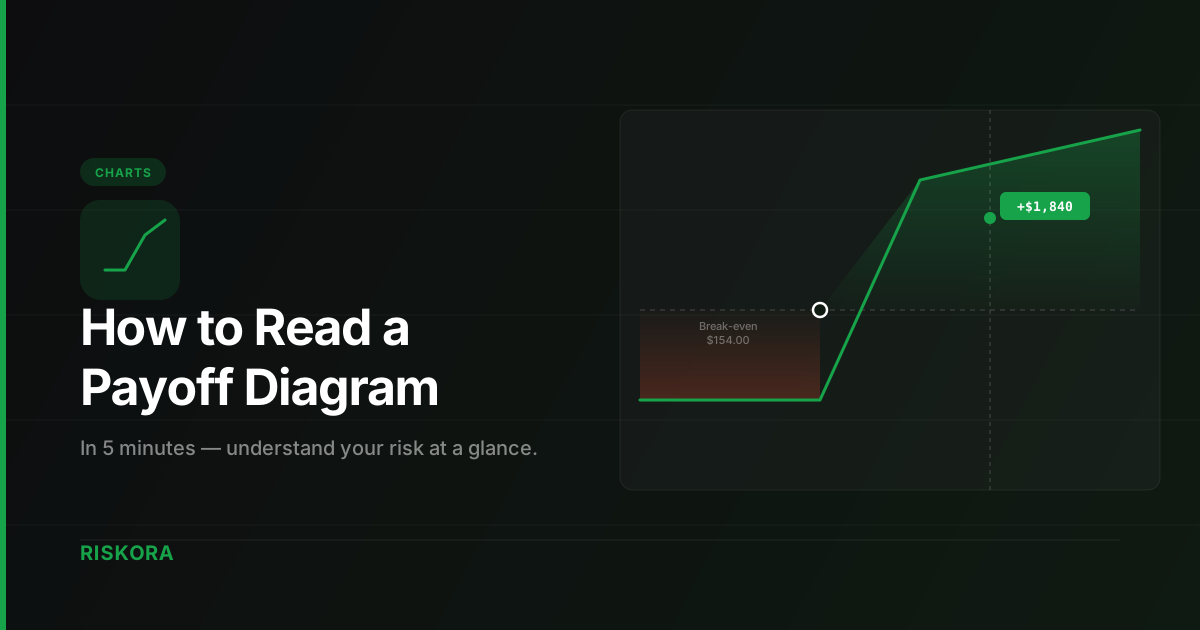
How to Read a Payoff Diagram in 5 Minutes
The payoff chart is the single most useful visualization in options trading. Learn to read it instantly — and never enter a trade blind again.

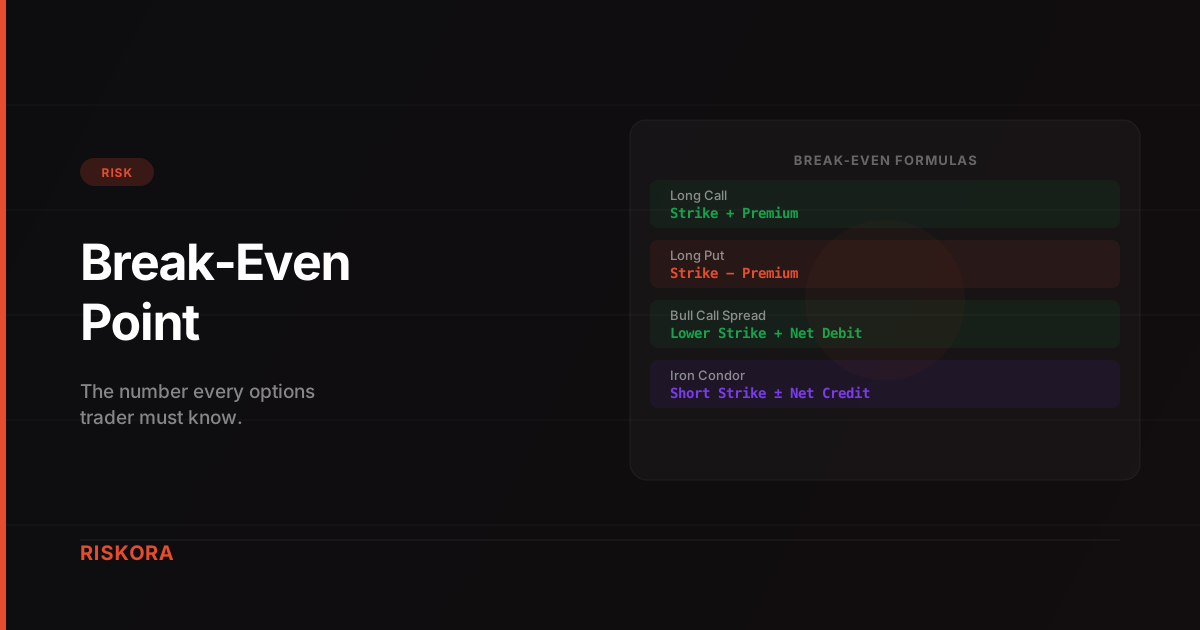
Break-Even Point: The Number Every Options Trader Must Know
Your break-even tells you exactly where the stock must be for your trade to start making money. Here's how to calculate it for any strategy.
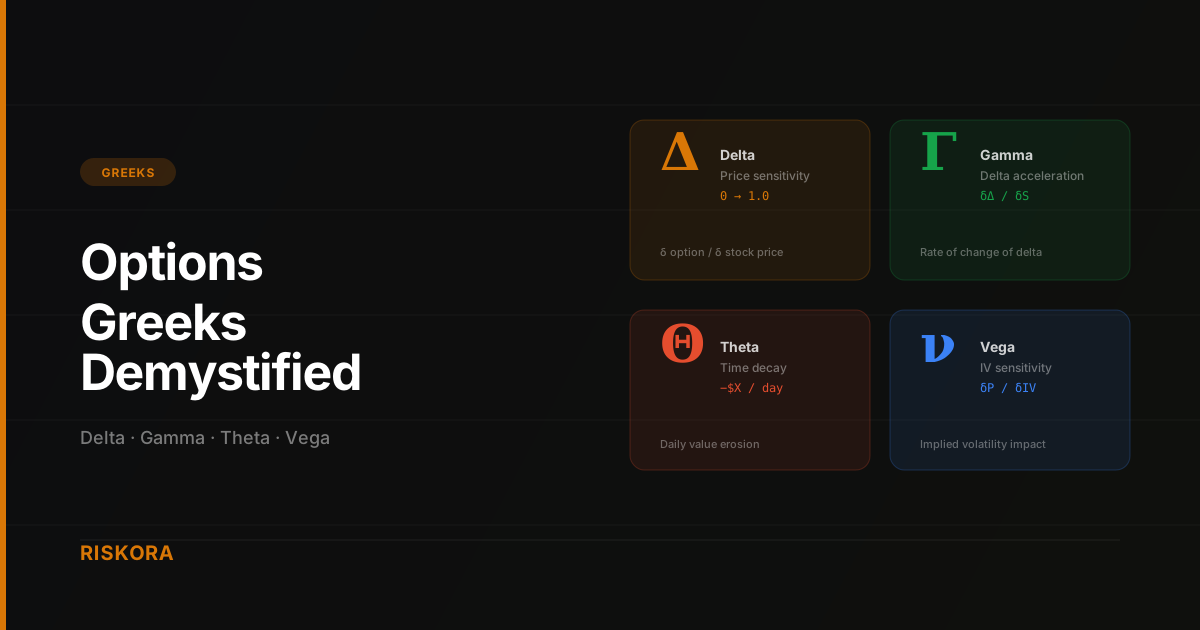
Options Greeks Demystified: Delta, Gamma, Theta & Vega
The Greeks measure how sensitive your option's price is to market changes. Understanding them is the difference between reacting and knowing.
Newsletter
Join the community
Subscribe to our newsletter for the latest news and updates