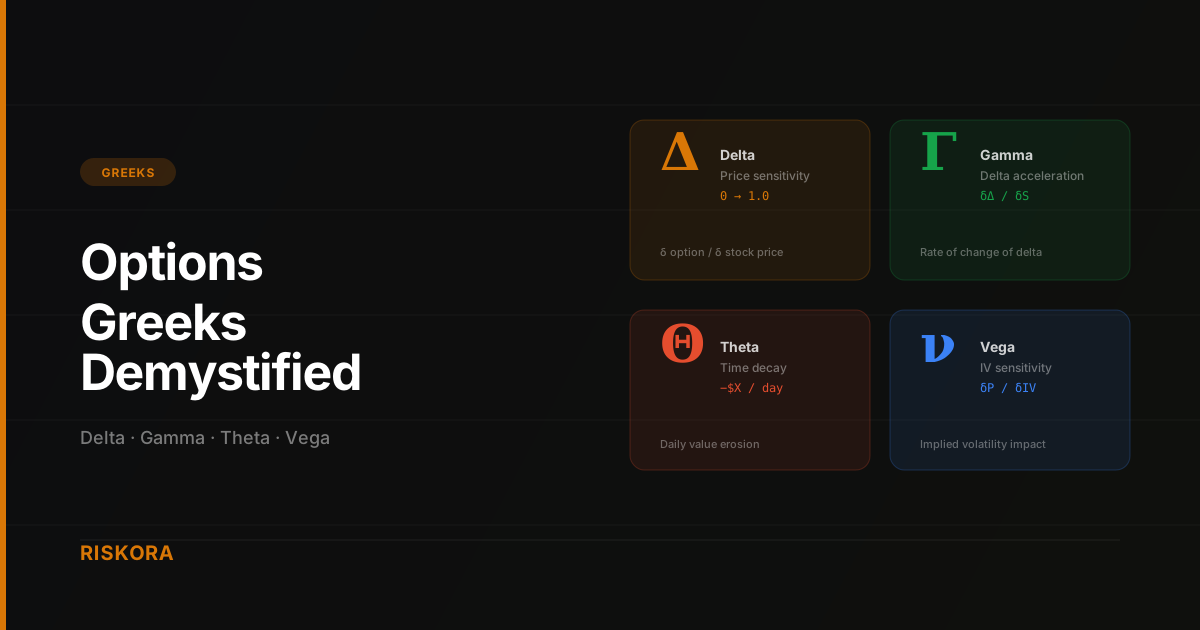
Options Greeks Demystified: Delta, Gamma, Theta & Vega
The Greeks measure how sensitive your option's price is to market changes. Understanding them is the difference between reacting and knowing.
Options are priced using a mathematical model (Black-Scholes), and their price responds to multiple inputs simultaneously: stock price, time, volatility, interest rates. The Greeks measure exactly how sensitive your option is to each of these inputs.
You don't need a math degree. You need four numbers.
Delta (Δ) — Sensitivity to Price Movement
What it measures: How much your option's price changes for every $1 move in the underlying stock.
- A call with delta 0.50 gains ~$0.50 for every $1 rise in the stock.
- A put with delta −0.40 gains ~$0.40 for every $1 drop in the stock.
Range: 0 to 1.0 for calls, −1.0 to 0 for puts.
Practical use:
- Delta ≈ 0.50 = at-the-money option
- Delta ≈ 0.80 = deep in-the-money, moves almost like stock
- Delta ≈ 0.10 = far out-of-the-money, unlikely to profit
Delta also approximates the probability the option will expire in-the-money. A 0.30 delta call has roughly a 30% chance of expiring profitable.
Gamma (Γ) — Rate of Change of Delta
What it measures: How much delta itself changes when the stock moves $1.
Gamma is the "acceleration" of your position. High gamma means delta shifts quickly as the stock moves — your position becomes more responsive.
- Long options have positive gamma — good for buyers.
- Short options have negative gamma — dangerous when the stock makes a big move.
Gamma is highest for at-the-money options near expiration. This is why selling short-dated ATM options can be very risky.
Theta (Θ) — Time Decay
What it measures: How much your option loses in value each day, all else being equal.
Theta is the most relentless Greek. Every day that passes, your long option loses a little value — even if the stock doesn't move at all.
- A theta of −$5 means your option loses $5 per day.
- Time decay accelerates in the final 30 days before expiration.
Who wins from theta?
- Option buyers fight theta — they need the stock to move fast enough to offset daily decay.
- Option sellers benefit from theta — they collect time decay as income.
Vega (ν) — Sensitivity to Volatility
What it measures: How much your option's price changes for every 1% change in implied volatility (IV).
- High IV = expensive options. Good for selling, bad for buying.
- Low IV = cheap options. Good for buying, bad for selling.
A vega of $0.10 means a 1% rise in IV adds $0.10 to the option's value.
Practical rule: Buy options when volatility is low; sell when it's high.
Quick Reference
| Greek | Measures | Long option | Short option |
|---|---|---|---|
| Delta | Price sensitivity | +Δ (call), −Δ (put) | Opposite |
| Gamma | Delta acceleration | Positive | Negative |
| Theta | Time decay | Negative (cost) | Positive (income) |
| Vega | IV sensitivity | Positive | Negative |
How to Use Greeks in Practice
You don't need to monitor Greeks every minute. But before entering any trade, check:
- What's the delta? — Are you positioned correctly for your directional view?
- What's the theta? — How much will time cost you per day?
- Is IV high or low? — Are you buying cheap or expensive options?
The Greeks work together. A high-vega, low-theta position behaves very differently from a low-vega, high-theta one — even if the payoff diagram looks similar.
Understanding the Greeks is what separates traders who rely on luck from those who rely on edge.
More Posts
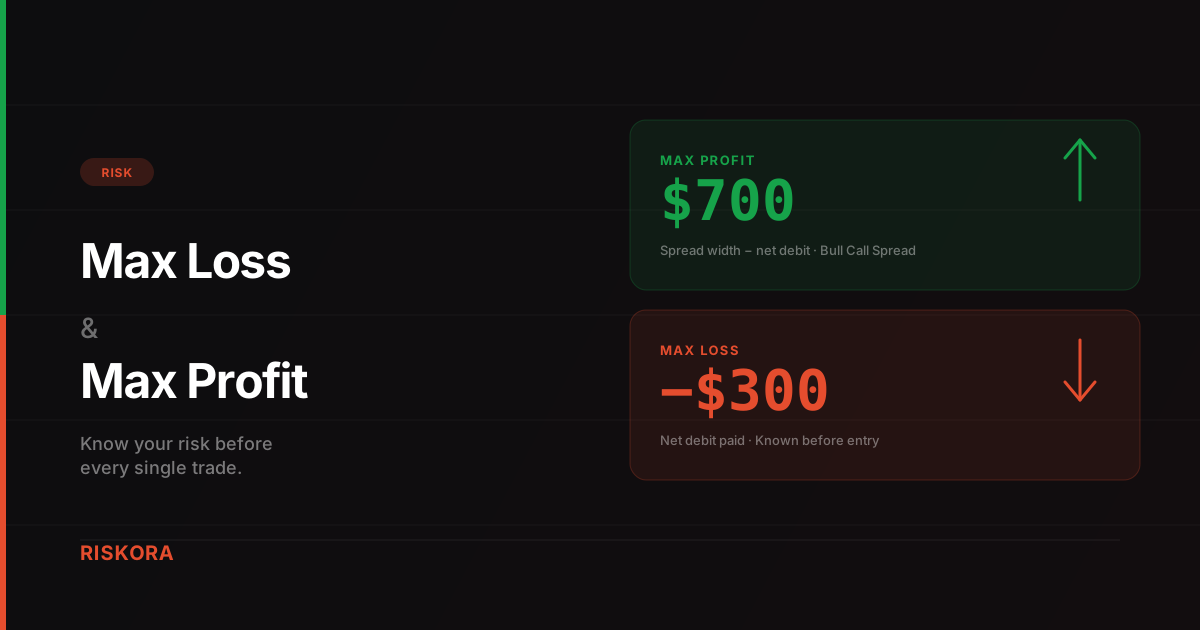
Max Loss and Max Profit: Know Your Risk Before Every Trade
Every defined-risk options strategy has hard limits on what you can gain or lose. Understanding these numbers is the foundation of responsible trading.

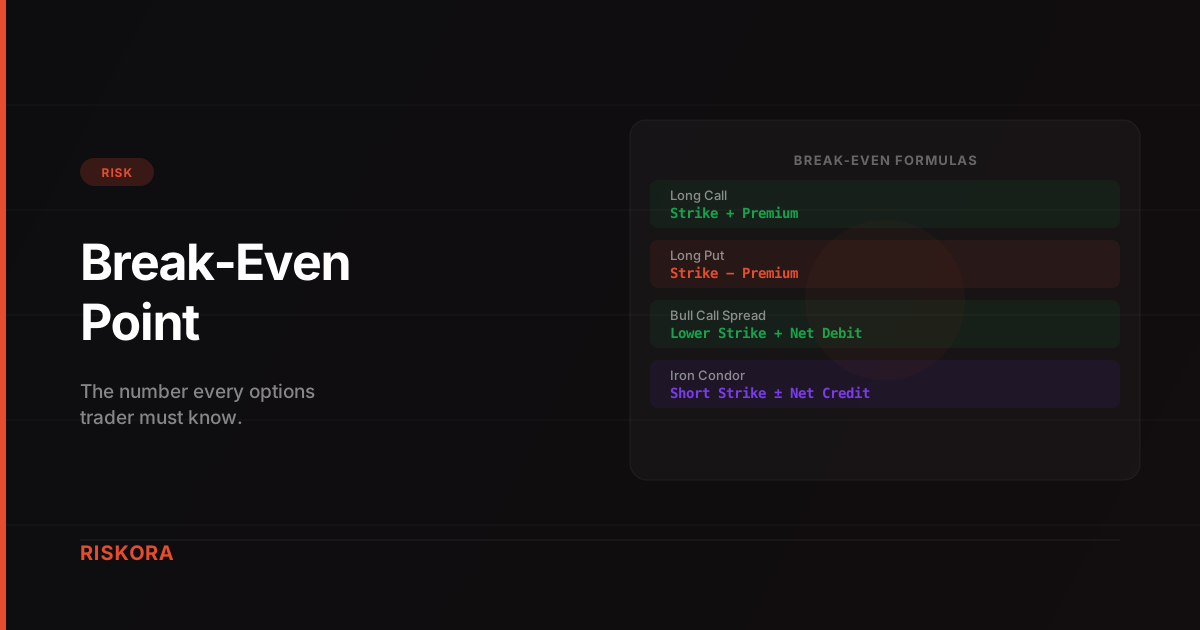
Break-Even Point: The Number Every Options Trader Must Know
Your break-even tells you exactly where the stock must be for your trade to start making money. Here's how to calculate it for any strategy.
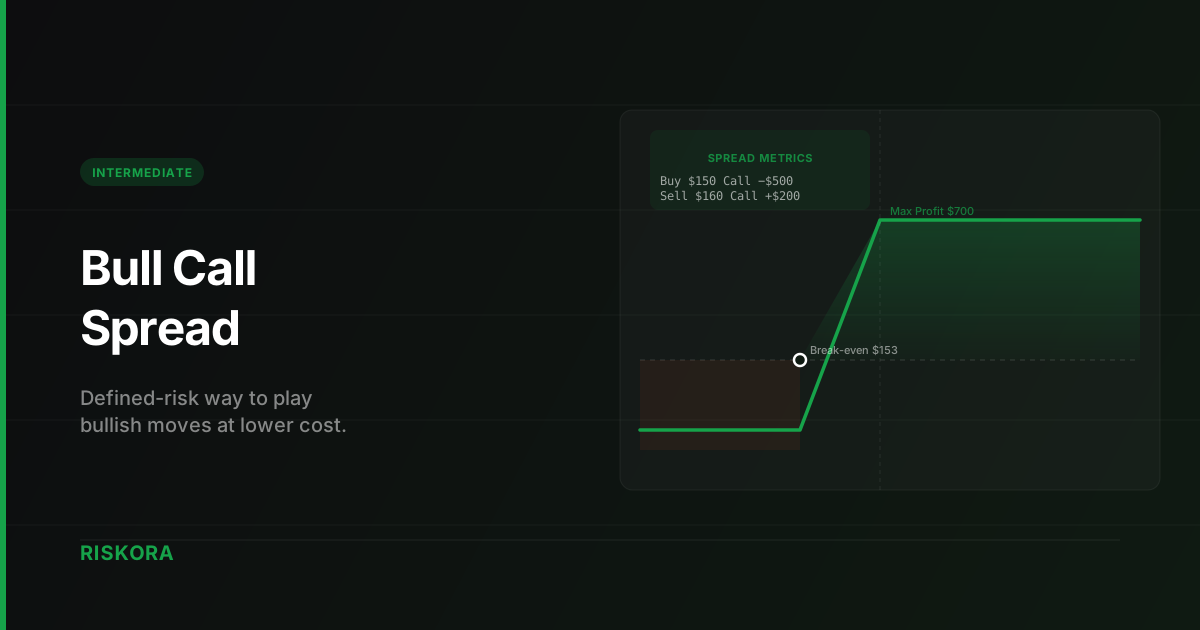
Bull Call Spread: A Defined-Risk Way to Play Bullish Moves
A bull call spread caps both your profit and your loss — making it ideal when you're moderately bullish but want to reduce the cost of entry.
Newsletter
Join the community
Subscribe to our newsletter for the latest news and updates