Break-Even Point: The Number Every Options Trader Must Know
Your break-even tells you exactly where the stock must be for your trade to start making money. Here's how to calculate it for any strategy.
Before entering any options trade, you need to answer one question: where does the stock need to be for me to break even?
If you can't answer that, you're trading blind.
What Is the Break-Even Point?
The break-even point is the underlying stock price at which your trade neither profits nor loses money at expiration. It's the exact line between winning and losing.
Understanding your break-even helps you answer the most important question in options trading: is this trade realistic?
If your break-even requires the stock to move 30% in 10 days, you need exceptional circumstances to win. If it only requires a 3% move in 30 days, your edge is much clearer.
Calculating Break-Even for Simple Strategies
Long Call
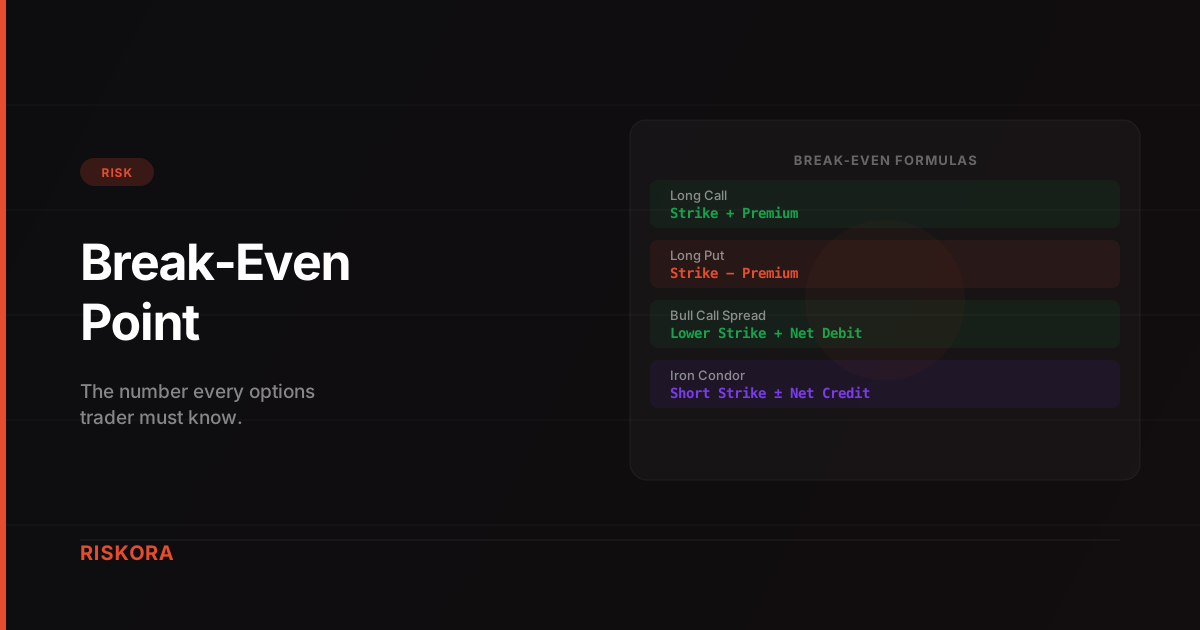
Break-even = Strike Price + Premium Paid
Example: Buy a $150 call for $4.00 → Break-even = $154
The stock must rise to $154 by expiration for you to break even.
Long Put
Break-even = Strike Price − Premium Paid
Example: Buy a $150 put for $3.50 → Break-even = $146.50
The stock must fall to $146.50 for you to break even.
Bull Call Spread
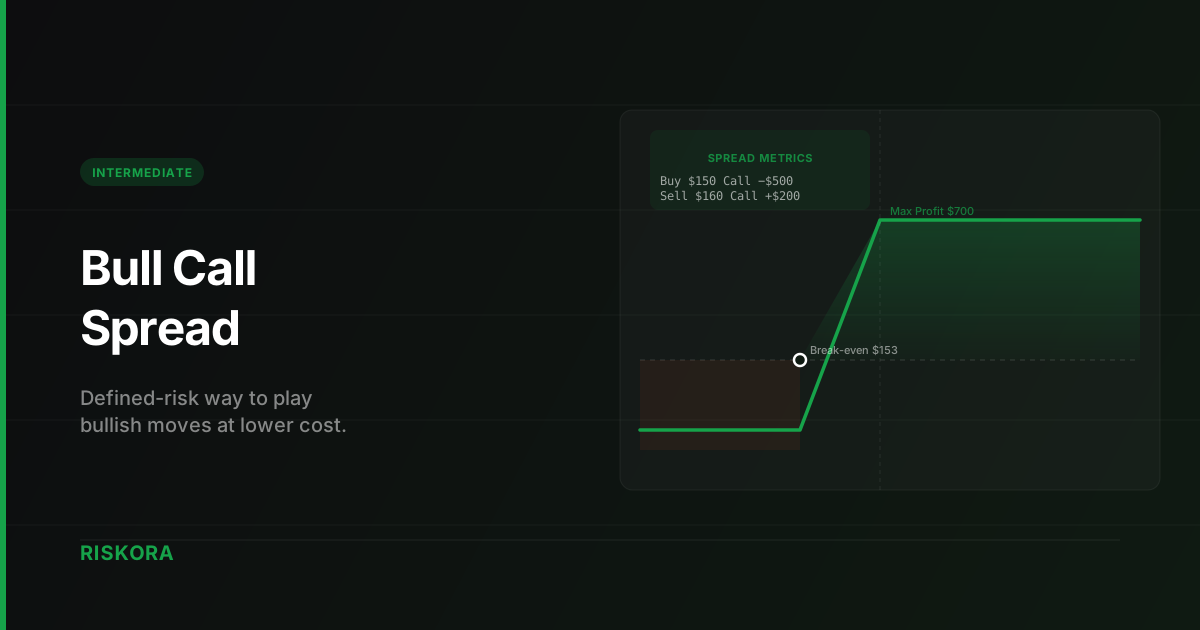
Break-even = Lower Strike + Net Debit Paid
Example: Buy $150/$160 call spread for $3.00 → Break-even = $153
Iron Condor
Two break-even points:
- Upper: Short call strike + net credit received
- Lower: Short put strike − net credit received
Example: Sell $185/$180 put spread and $215/$220 call spread for $1.50 net credit
- Upper break-even: $215 + $1.50 = $216.50
- Lower break-even: $185 − $1.50 = $183.50
As long as the stock stays in this range, you profit.
Break-Even in Context: Is Your Trade Realistic?
Calculating break-even is only useful if you compare it to the current stock price and the time remaining.
Ask yourself:
- How far is break-even from the current price? A 10% move in 5 days is very different from a 10% move in 90 days.
- What has this stock historically done over this timeframe? Check recent volatility.
- Does my thesis justify this move? Don't let a cheap premium blind you to an unrealistic break-even.
Current vs. Expiration Break-Even
The break-even point we've calculated above is for at expiration. If you're closing the trade before expiration, the effective break-even is lower because time value still exists in the option.
This is why experienced traders often close positions at 50–70% of max profit rather than holding to expiration — the stock doesn't need to reach the theoretical break-even for the trade to be very profitable.
Quick Reference
| Strategy | Break-even formula |
|---|---|
| Long call | Strike + premium |
| Long put | Strike − premium |
| Bull call spread | Lower strike + net debit |
| Bear put spread | Upper strike − net debit |
| Short call | Strike + premium received |
| Short put | Strike − premium received |
OptionBrain calculates break-even automatically for every strategy on the Strategy Explorer — along with your max profit, max loss, and payoff chart. You'll never have to calculate it manually.
More Posts
Bull Call Spread: A Defined-Risk Way to Play Bullish Moves
A bull call spread caps both your profit and your loss — making it ideal when you're moderately bullish but want to reduce the cost of entry.

Options Greeks Demystified: Delta, Gamma, Theta & Vega
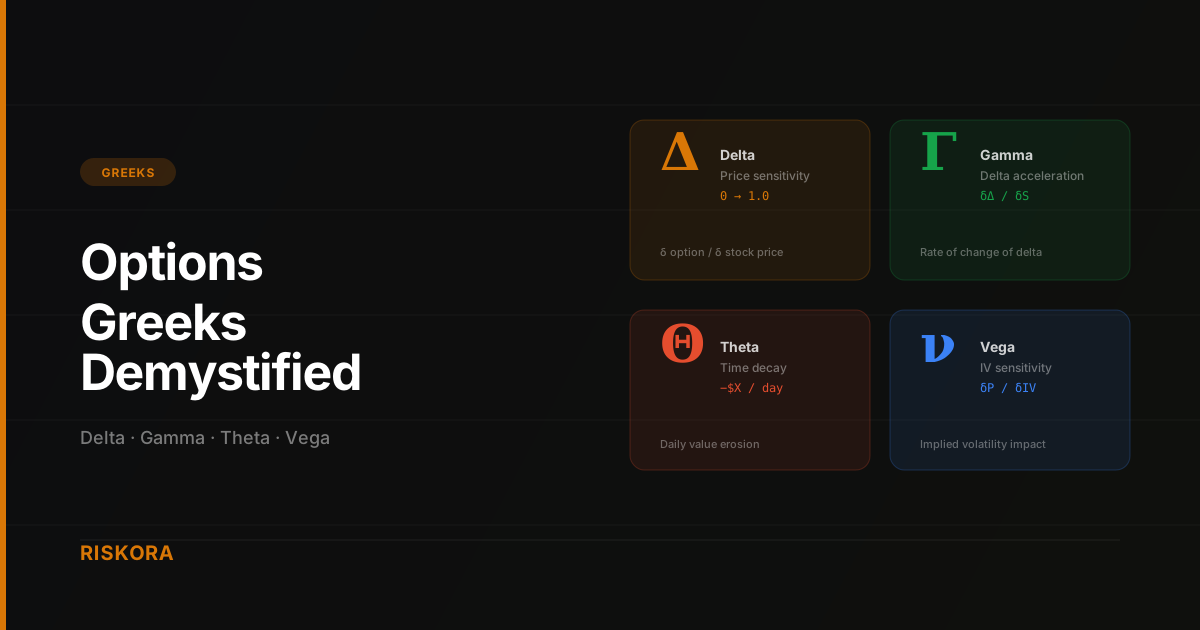
The Greeks measure how sensitive your option's price is to market changes. Understanding them is the difference between reacting and knowing.
6 Market Outlooks and the Options Strategies That Match Them
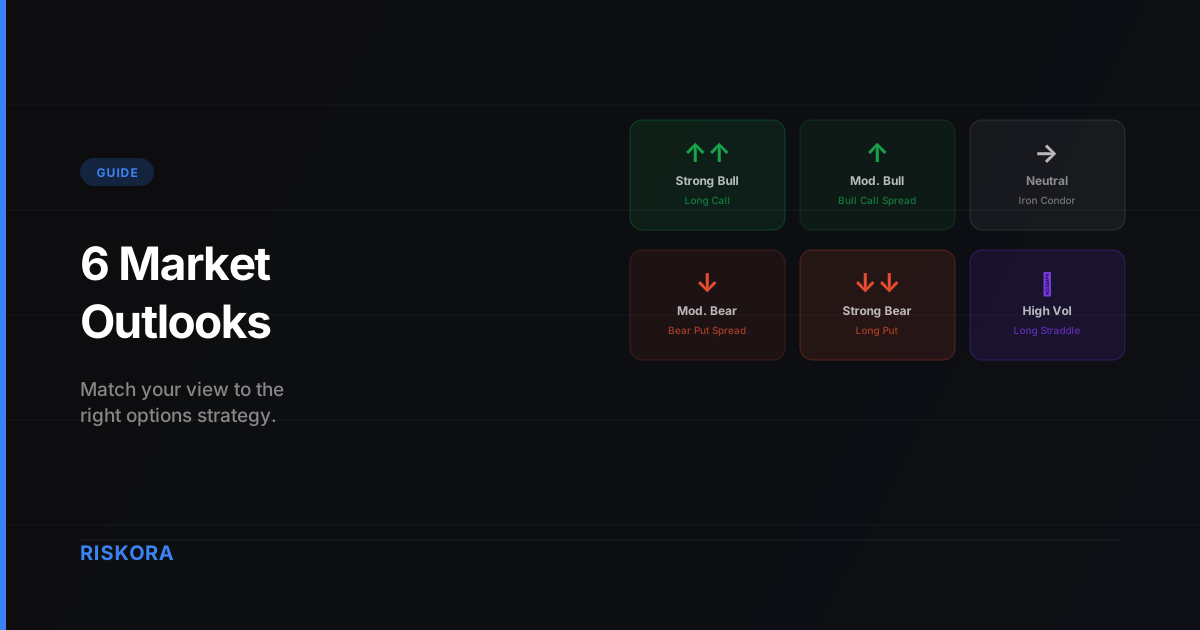
Strongly bullish? Expecting high volatility? Neutral? There's a strategy built for each scenario. Here's how to match your view to the right trade.
Newsletter
Join the community
Subscribe to our newsletter for the latest news and updates