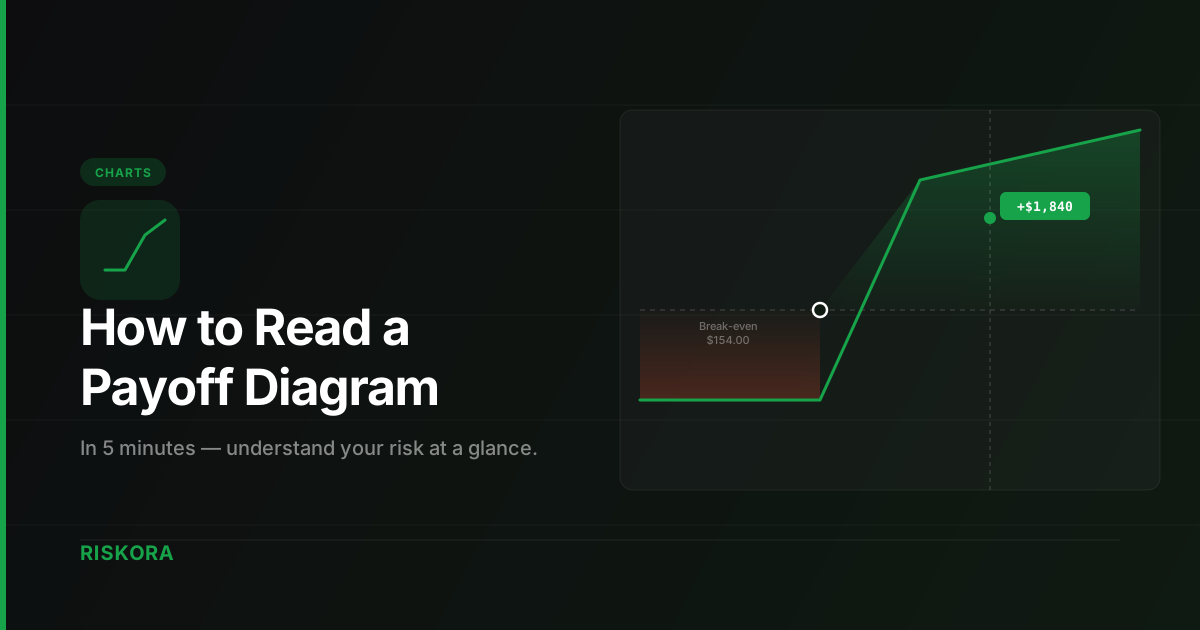
How to Read a Payoff Diagram in 5 Minutes
The payoff chart is the single most useful visualization in options trading. Learn to read it instantly — and never enter a trade blind again.
A payoff diagram answers one question: for any stock price at expiration, how much money do I make or lose?
It sounds simple. But being able to glance at a chart and instantly understand your risk profile is a superpower in options trading.
The Anatomy of a Payoff Chart
Every payoff diagram shares the same structure:
- Horizontal axis (X) — The underlying stock price at expiration
- Vertical axis (Y) — Your profit or loss in dollars
- Zero line — The horizontal dashed line at $0. Above it, you profit. Below it, you lose.
- Break-even point — Where the P&L line crosses zero. This is the stock price you need to break even.
Reading a Long Call
A long call payoff diagram looks like a hockey stick lying on its side:
- To the left of the break-even: The line is flat at the bottom — you lose only the premium you paid (max loss is fixed).
- At break-even: The line crosses zero.
- To the right of break-even: The line slopes upward indefinitely — unlimited profit potential as the stock rises.
What to note at a glance:
- Where is the flat bottom? → That's your max loss.
- Where does the line cross zero? → That's your break-even.
- How steep is the upward slope? → That's your rate of profit growth.
Reading a Long Put
The mirror image: flat at the top (limited profit), then sloping down to the left as the stock price falls. The further the stock drops, the more you profit — capped only by the stock reaching zero.
Reading Multi-Leg Strategies
For strategies like spreads and condors, the payoff diagram has multiple kinks:
- Bull Call Spread — Rises from a flat loss zone, then flattens again at the max profit ceiling.
- Iron Condor — A tent shape: profit in the middle (low volatility), losses on both sides (big moves in either direction).
- Straddle — A V-shape: profits when the stock moves big in either direction, loses in the middle.
Once you can read these shapes, you can instantly match a strategy to your market outlook.
Current vs. Expiration View
A payoff diagram can show two things:
- At expiration — Pure intrinsic value. Clean lines, no curves.
- Current value — Includes time value (theta). The lines are curved because the option still has time left and can recover.
Watching the current value curve flatten toward the expiration line as time passes is how you understand theta decay in action.
The One Thing to Always Check First
Before placing any options trade, look at the payoff diagram and find:
- Max loss — Can you accept this worst case?
- Break-even — Is this realistic by expiration?
- Max profit — Is the potential reward worth the risk?
If you can't answer all three in 30 seconds, you're not ready to trade yet. OptionBrain's Strategy Explorer generates the payoff diagram instantly as you build any position, so you're never flying blind.
More Posts
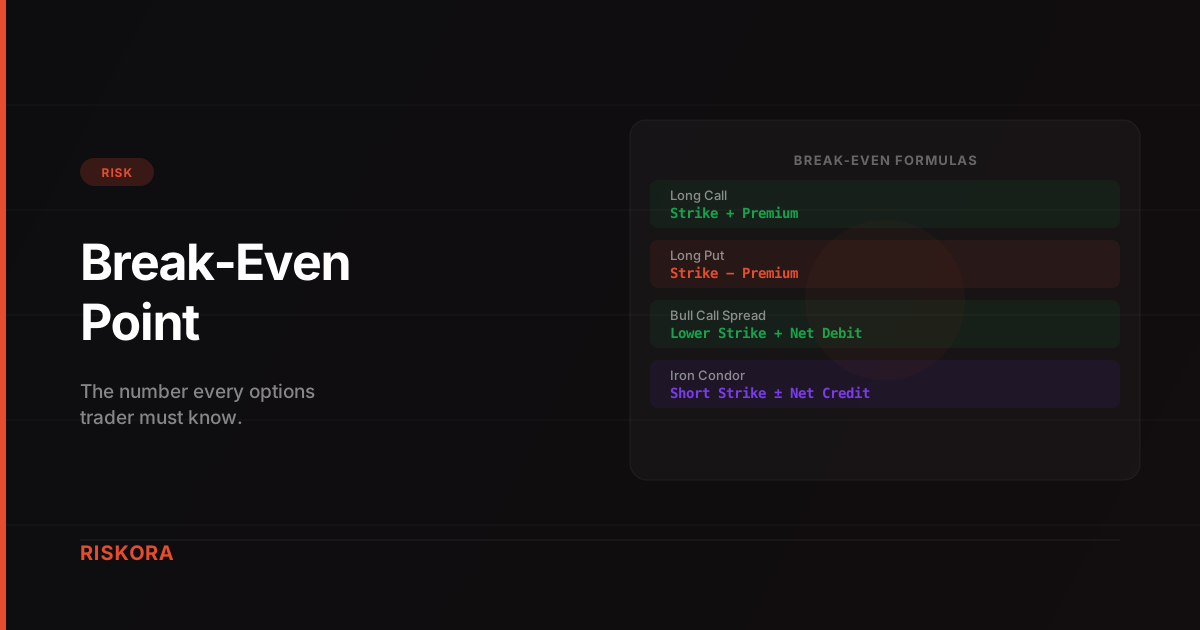
Break-Even Point: The Number Every Options Trader Must Know
Your break-even tells you exactly where the stock must be for your trade to start making money. Here's how to calculate it for any strategy.

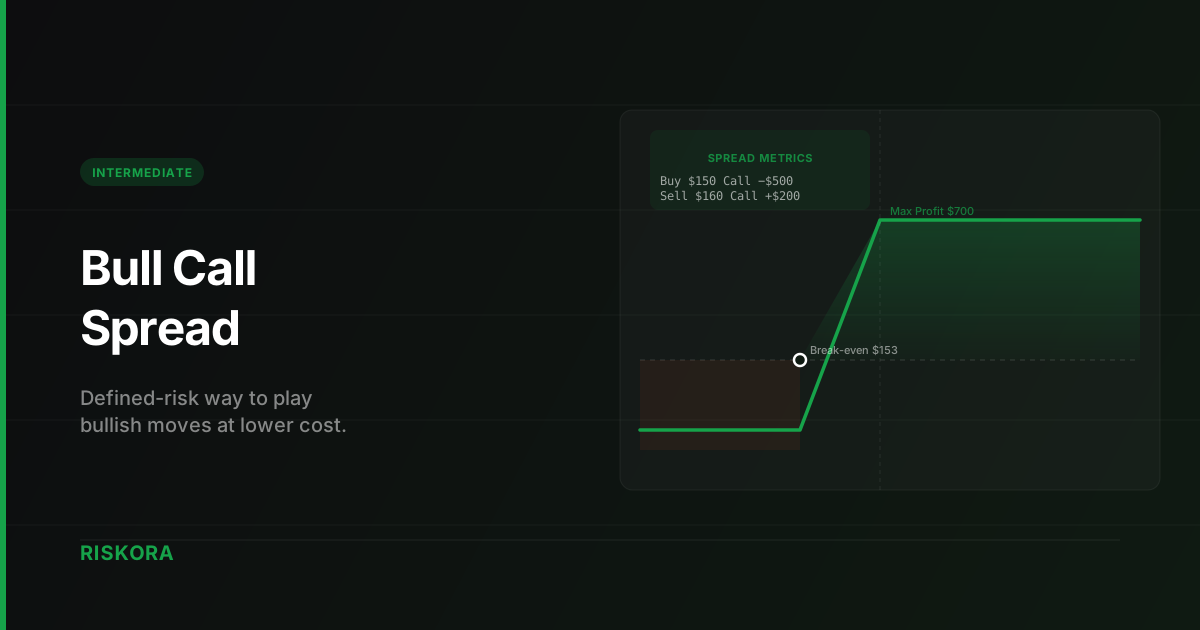
Bull Call Spread: A Defined-Risk Way to Play Bullish Moves
A bull call spread caps both your profit and your loss — making it ideal when you're moderately bullish but want to reduce the cost of entry.
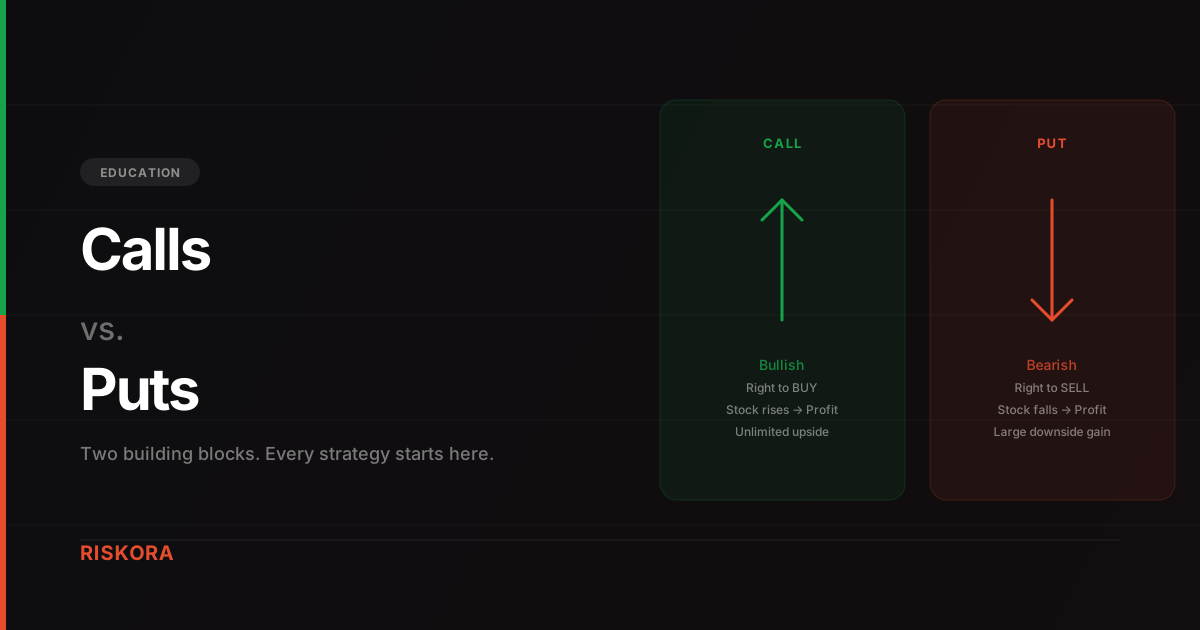
Calls vs. Puts: The Two Building Blocks of Options Trading
Every options strategy is built from just two components: calls and puts. Master the difference and you hold the foundation of all options knowledge.
Newsletter
Join the community
Subscribe to our newsletter for the latest news and updates