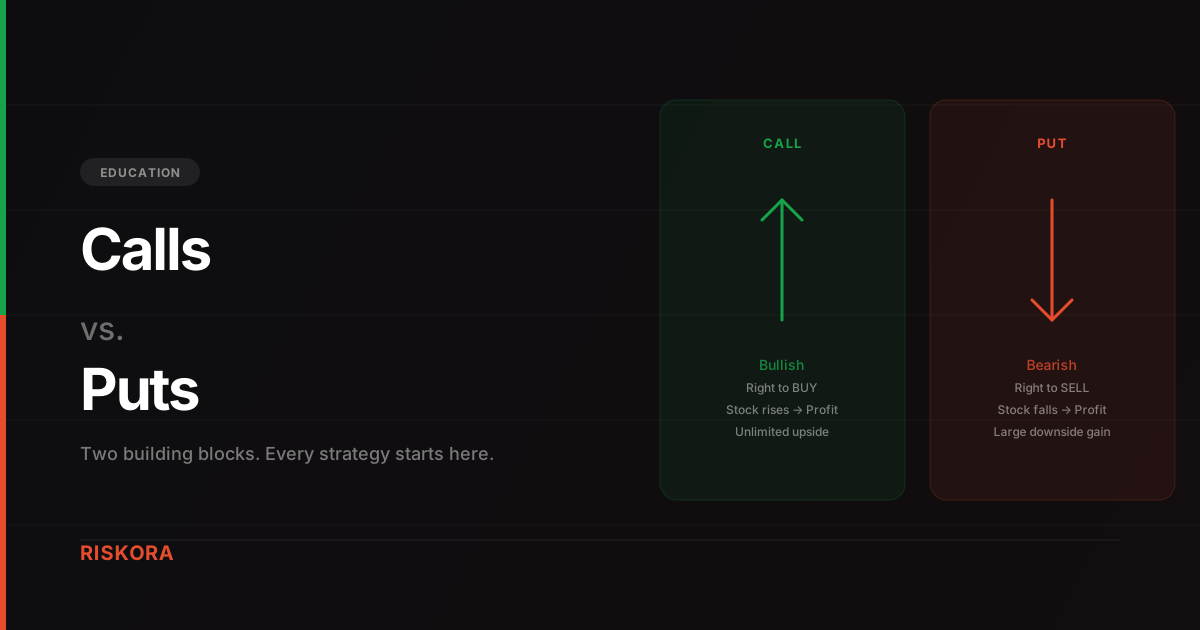
Calls vs. Puts: The Two Building Blocks of Options Trading
Every options strategy is built from just two components: calls and puts. Master the difference and you hold the foundation of all options knowledge.
Every options strategy in existence — from the simplest long call to the most complex multi-leg spread — is built from just two instruments: calls and puts.
Understanding the difference between them is not optional. It is the foundation.
The Call Option
A call option gives the buyer the right to buy 100 shares of a stock at the strike price before expiration.
You buy a call when you expect the stock to go up.
Call buyer profile:
- Pays a premium upfront
- Profits when stock rises above the break-even (strike + premium)
- Maximum loss: premium paid
- Maximum profit: unlimited
Example
- Stock trading at $180
- Buy 1 call at $185 strike, expiring in 30 days, for $3.00 ($300 total)
- Break-even at expiration: $188
- If stock rises to $200: profit = ($200 − $185 − $3) × 100 = $1,200
- If stock stays at $180: option expires worthless, loss = $300
The Put Option
A put option gives the buyer the right to sell 100 shares at the strike price before expiration.
You buy a put when you expect the stock to go down.
Put buyer profile:
- Pays a premium upfront
- Profits when stock falls below the break-even (strike − premium)
- Maximum loss: premium paid
- Maximum profit: significant (stock falling to zero)
Example
- Stock trading at $180
- Buy 1 put at $175 strike, expiring in 30 days, for $2.50 ($250 total)
- Break-even at expiration: $172.50
- If stock falls to $160: profit = ($175 − $160 − $2.50) × 100 = $1,250
- If stock stays at $180: option expires worthless, loss = $250
Side-by-Side Comparison
| Call | Put | |
|---|---|---|
| Right to | Buy shares | Sell shares |
| Bullish or Bearish | Bullish | Bearish |
| Profits when | Stock rises | Stock falls |
| Break-even | Strike + Premium | Strike − Premium |
| Max loss | Premium paid | Premium paid |
| Max profit | Unlimited | Strike × 100 (stock → $0) |
Buying vs. Selling Options
You can also sell calls and puts — the other side of the trade:
- Sell a call (short call) — You collect premium but take on unlimited risk if the stock rises.
- Sell a put (short put) — You collect premium and profit if the stock stays flat or rises.
Selling options is more complex and carries higher risk. Beginners should focus on buying calls and puts first.
When to Use Each
| Market view | Strategy |
|---|---|
| Strongly bullish | Buy call |
| Mildly bullish | Bull call spread |
| Strongly bearish | Buy put |
| Mildly bearish | Bear put spread |
| Neutral / low volatility | Iron condor, short straddle |
| High volatility expected | Long straddle, long strangle |
The key is matching your strategy to your outlook — not the other way around.
Explore every strategy on OptionBrain's Strategy Explorer with live payoff charts, break-even calculations, and built-in education for each one.
More Posts
What Is an Options Contract? A Beginner's Complete Guide
Options give you the right — not the obligation — to buy or sell stock. Here's everything you need to know before placing your first trade.

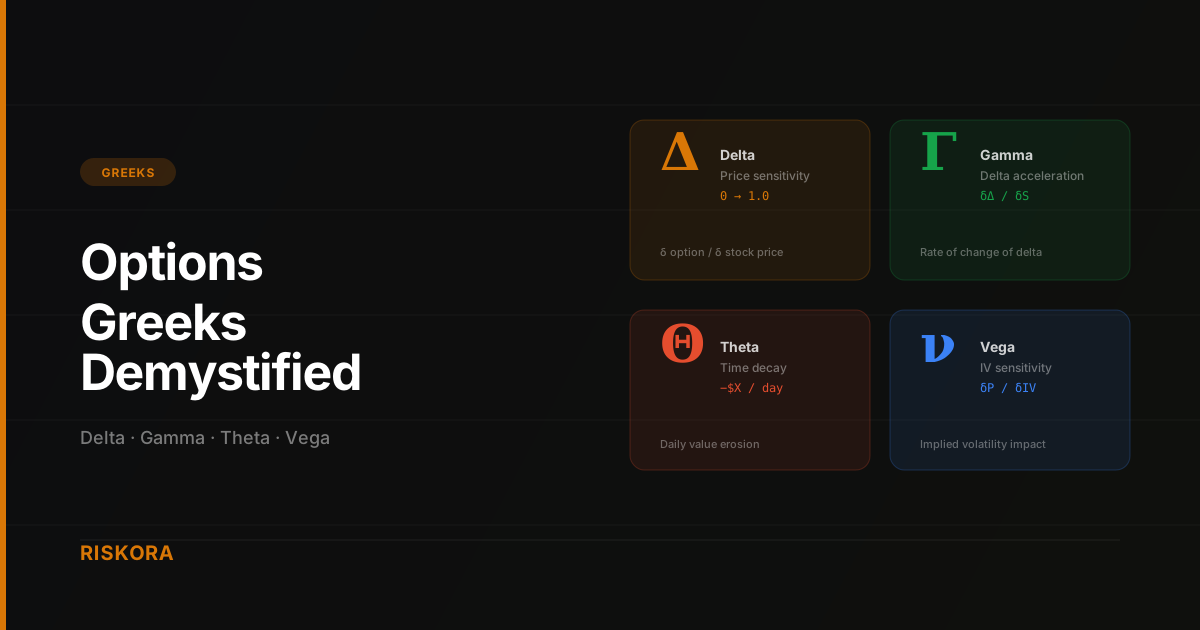
Options Greeks Demystified: Delta, Gamma, Theta & Vega
The Greeks measure how sensitive your option's price is to market changes. Understanding them is the difference between reacting and knowing.
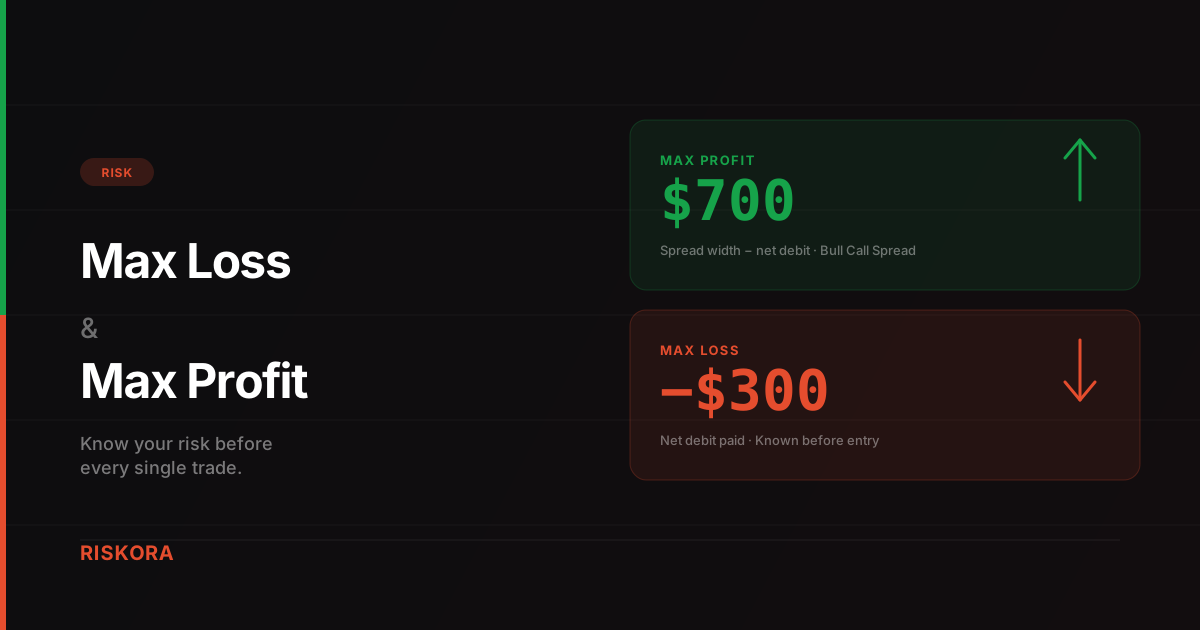
Max Loss and Max Profit: Know Your Risk Before Every Trade
Every defined-risk options strategy has hard limits on what you can gain or lose. Understanding these numbers is the foundation of responsible trading.
Newsletter
Join the community
Subscribe to our newsletter for the latest news and updates